
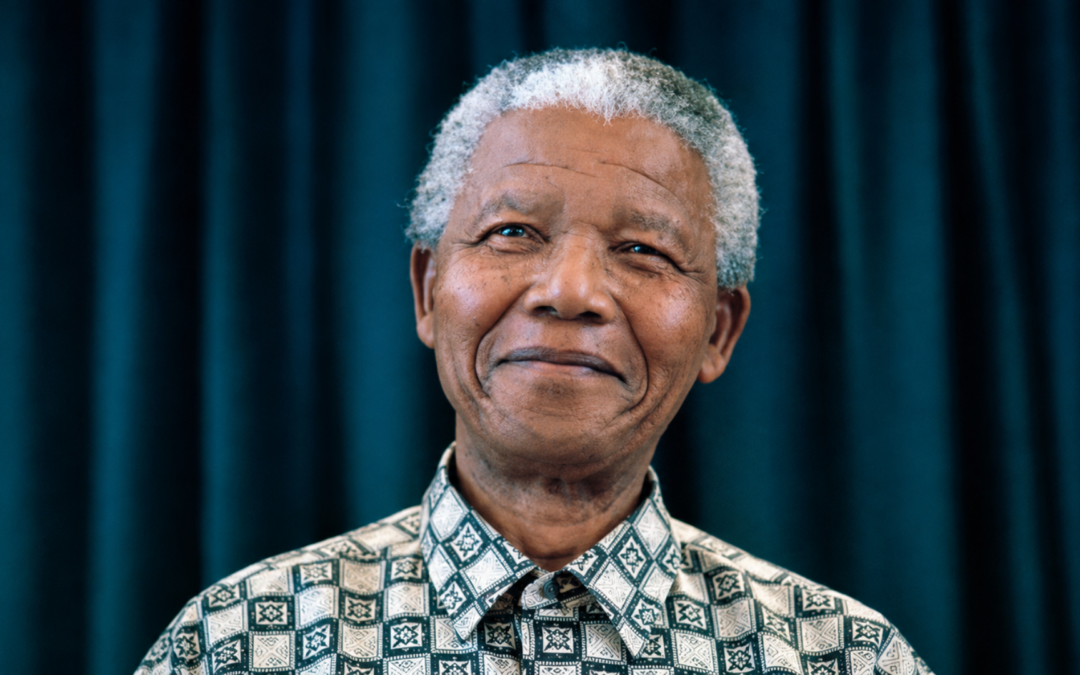
Each year, Nelson Mandela International Day invites us to reflect on the legacy of one of humanity’s greatest moral leaders. More than a celebration of his life, it is an opportunity to ask how we are living the values Madiba embodied. In a world increasingly marked by division, conflict and uncertainty, his example remains as relevant as ever.
When I think of Nelson Mandela, I am reminded of his unwavering commitment to truth, justice, human dignity, and the courage to stand firm in these principles, even in the face of immense adversity.
“For to be free is not merely to cast off one’s chains, but to live in a way that respects and enhances the freedom of others.” — Nelson Mandela
These words remind us that true freedom is inseparable from our shared humanity. Yet fear and insecurity often lead us to blame or reject those we perceive as different. In doing so, we diminish not only others but ourselves, eroding our own humanity and our capacity to experience genuine peace and fulfilment.
If our society is to heal, we must rekindle the spiritual values that nurture kindness, compassion, and respect for life. Communities become peaceful when individuals become peaceful. Lasting change begins within.
Creating space for self-reflection and meditation allows us to become aware of the quality of our thoughts, attitudes and actions. As our awareness grows, so does our ability to choose differently. When we consciously place ourselves in another person’s shoes, judgment begins to give way to compassion. It is here that conscience awakens, relationships are restored, and inner freedom begins to emerge.
From a spiritual perspective, the labels we use to define ourselves—race, nationality, ethnicity, culture, or social status—are secondary identities. They may shape our experiences, but they do not define our essence. Because these identities are constantly changing, relying on them alone leaves us feelingvulnerable and insecure.
Beneath these external identities lies our deepest truth: the soul. The soul is the conscious self—the thinker, the feeler, the creator of thoughts and memories, and the seat of conscience. As spiritual beings, we possess an inner nature of peace, love and wisdom. Reconnecting with this awareness provides a profound sense of stability and belonging that no external circumstance can take away.
When we recognise ourselves as souls, we naturally begin to see others in the same light. Our relationships become more than social interactions; they become exchanges of spiritual energy. The law of karma reminds us that whatever we give—whether kindness, respect, anger or resentment—eventually returns to us. Seeing ourselves and others through the lens of the soul affirms our shared humanity. It is this understanding that gives deeper meaning to the greeting Namaste —”I honour the divine within you.”
When we live with this level of respect for one another, our conscience is truly free. This is perhaps the greatest freedom of all. Living against our conscience creates inner conflict that often manifests as stress, intolerance and violence. The suffering we witness in society is a reminder that our deepest need is not simply social or political change, but inner transformation.
Peace cannot be built upon another person’s pain. Aggression ultimately breeds fear, even in the heart of the aggressor. True peace arises when we recognise that our well-being is inseparable from the well-being of others.
As we commemorate Nelson Mandela International Day, may we honour Madiba not only through acts of service but through the way we think, speak and live each day. Let us embrace the spirit of
Namaste —recognising the sacred dignity within ourselves and within every person we meet. In doing so, we continue the legacy of a man who showed the world that the greatest freedom begins within.
Author: Pratiba Daya